Thursday, March 5, 2009

AMNESTY for All the SENIORS!

(The photo has nothing to do with the post. I just want you all to see what I am going to wear on Saturday for the grad ball. ha!)


My (Not So Very) Dear Seniors,


Being a considerate teacher that I am - I am giving amnesty to all the Seniors.

You may still submit your HOMEWORKS (Speech, Figurative Language, Song Lyrics) and PROJECTS (Theme about your play, Book Report, Filler, Notebook) which are required for the signing of your second clearance.

To those who failed to submit their homeworks about "Truman Show", submit a reaction paper instead. The content should also answer the 10 guide questions. But your opinion as a viewer (similar to the Film Analysis, but a little shorter this time) matters here. Write as if you are a film critique. FORMAT: 2 pages, double-spaced, font size 12, justified-paragraphs

You may also submit your extra projects (Speech of your choice, Original poem) for bonus points.

The deadline will be tomorrow (Friday), March 6, 2009 at 8:00 A.M. I will no longer accept anything beyond the deadline.

I will go to your classrooms to collect everything.

Be ready with the budget for the printer(s) that you will be donating for the school. Alright?

As I have said, once you're done studying hard...let's all start partying harder!!!


You know you (really) hate me,


XOXO

Thursday, February 26, 2009

ENGLISH IV - Pointers to Review

My (Not So) Dear Seniors,

Since I want you all to graduate, help me help you.


Below is the "key to success". I am here to ENCOURAGE everyone of you to pass this examination. All is given an equal chance. So, study hard...and afterwards, party harder. That is, if you only feel that you have passing marks in all of your subjects.


CARPE DIEM, Seniors!


You know you hate me...


XOXO


REMINDERS:


1. Notebooks in English will be collected tomorrow before the start of the test.


2. Use ballpens with blue ink only for the periodical test.


3. Pages 5 and 6 serve as your Answer Sheet (NO ERASURE for all your answers).


4. You may write on pages 1 to 4, which can be used as your SCRATCH PAPER (you can have as many erasure as you want here).


5. Fill out the boxes (Your individiual information such as Name, Section, and Class Number).


6. CAPITAL LETTERS are needed for your answers from Number 1 to 24.


7. Shade the circle that corresponds to the letter of the correct answer from Number 25 to 55.


8. Write only your answers for Number 56 to 65 on the answer sheet.


9. Compose a 5-sentence paragraph for Letters A and B for the Essay part. The Affective part must be concise but precise. (Remember: 10 points each)


10. The same (Sir Red's) rules still apply: Wrong Spelling and/or Wrong Grammar is/are considered wrong.


GENERAL TIP: How to Pass the Examination


- Answer the items on page 5 (Test V: Essay Letters A and B first), then answer Test IV Letter B (Figures of Speech, Classification, and Example). You have a copy of the hand-out, so choose only 5 of what you think are the simplest.


- Also on page 5, answer the Affective part of the test. Make it short but with a lot of sense. Please think...write with depth.


- Then, go to page 1 and answer Test I (Recall the quiz we had). For Test II Letter A (Comprehension), a word [verb] will be formed, as always. There are 11 choices, so, DO NOT choose the 2 incorrect answers. Make sure you have a final answer before writing it on the asnwer sheet.


- Now, answer Test IV Letter A (Application) by simply writing your answers on page 6 (answer sheet). Make sure you have chosen the correct one. Find the correct answers for the PRACTICE EXERCISE found at the bottom of this post. This will help you learn the correct rules in Subject-Verb Agreement that could lead you to having a perfect score on this part.


- The next to the last part of the test which you need to answer is the Multiple Choice (Test II Letter B) found on page 2. The coverage of the questions is at the bottom part of this post.


- The LAST part of the test which you have to answer is Test III (Analysis) from page 2 to 4. Focus on the coverage of the questions provided below.


For a more specific breakdown of the topics, please take note of the content of the pointers to review...


FLOW of the Test


Test I - Simple Recall (Identification) 15 points
- CONFIDENCE
- EFFECT
- IMPROMPTU
- INTEGRITY
- INTELLIGENCE
- LOGICAL
- MANUSCRIPT
- OCCASION
- PERSONAL
- PUBLIC SPEAKING
- SPEAKER
- TECHNIQUE
- TO ENTERTAIN
- TO INFORM
- TO PERSUADE


Test II, Letter A - Comprehension (Matching Type) 9 points
- ALLUSION
- APOSTROPHE
- CLIMAX
- HYPERBOLE
- METONYMY
- PARADOX
- PERSONIFICATION
- REPETITION
- SIMILE
- Metaphor
- Irony


Test II, Letter B - Comprehension (Multiple Choice - A, B, C, or D) 11 points
- Figurative Language
- Sophocles
- Sappho
- Aristophanes
- Anacreon
- Euripides
- Virgil
- Arrian
- Epictetus
- Horace
- Martial


Test III - Analysis (Multiple Choice – A, B, C, or D) 20 points

Roman Literature – 5 items
Short Story – 10 items
Figurative Language – 5 items


Test IV, Letter A - Application (Select the correct answer – Write your answers!) 10 points

SUBJECT-VERB AGREEMENT: There are only 10 items for this test. Below are 15 items which serve as your Practice Exercise! Answer this exercise and do self-check. Refer to your notes, hand-outs, and other books.

- That bag of oranges (looks, look) fresh.
- Your trousers (needs, need) to be cleaned.
- That pair of trousers (looks, look) good on you.
- The economics of the trip (was, were) pleasing.
- Most of the sand (is, are) wet from the high tide.
- My father or my brothers (is, are) coming with me to the ball game.
- (Is, Are) my boss or my sisters in the union going to win this grievance?
- Either Matilda or her brothers (use, uses) the symphony tickets each week.
- There (has, have) to be some people left in that town after yesterday's flood.
- Either the two kittens or the puppy (sits, sit) in my lap while I watch television.
- My friends who are in the band (wants, want) me to play a musical instrument.
- The mayor and the governor (hopes, hope) that the bill will soon become a law.
- The phone that belongs to the two friends (has, have) finally run out of minutes.
- Even though the students like the class, a few (thinks, think) that it is too complicated.
- The tornadoes that tear through this county every spring (is, are) more than just a nuisance.


Test IV, Letter B - Application (Write your answers – Kind, Classification, and Example) 15 points

Example:

Figure of Speech: Simile Classification: Resemblance Example: He shouts like a dog.


Test V - Essay (Write a 5-sentence paragraph!) 10 points each

Letter A
Public Speaking: Definition, 3 Types of speech according to its classification, and IMPORTANCE of Public Speaking


Letter B
Figurative Language: Definition, 3 Kinds of figures of speech and their classification, and IMPORTANCE of Figurative Language


Photo Courtesy: http://i140.photobucket.com/albums/r33/efaisalz/spongebob_1.jpg

Saturday, February 21, 2009

BOOK REPORT: Tuesdays With Morrie


My general tip is to read and understand what is written below this post as your guide for the book report. Make sure that all parts are included (INTRODUCTION, BODY with 4 Sub-Parts, and CONCLUSION). Below is the specific book report format:

- At least 3 pages (preferably) or up to a maximum of 4 pages only
- A MUST : Use short, clean, unscented white bond paper
(letter size / 8.5” x 11”) only
- Printed from the Computer (or Typewritten) – Spacing: double-spaced only
- Font type: Times New Roman only
- Font size: 10 (at least) or 12 (at most) only
- Font color: Black only
- All Paragraphs must be Justified (Not Centered nor Aligned to the left or right)
- Or if Handwritten (A MUST : write legibly, in print) – Spacing: 1.5 only
- No erasure (in any form), No cover page, No folders
- Upper left topmost part – Surname, Given name, and Middle name
- below are your Year Level and Section
- Upper right topmost part – Book Report: A Project in English IV
- below is the Date of submission
- Centered: Title of the book / report


DEADLINE of SUBMISSION:

- February 24, 2009 (Not later than the Tuesday morning break at 10:30 A.M.)
- BONUS
points will be given to those who will submit the book report WITHOUT ERRORS on the format, so do what is asked of you to do, and
- Deductions from the Total Grade for Late Submission will be given

Here is the content of the book report:


Your Original Title for the Report (Write Original Subtitles for Each Part As Well)


INTRODUCTORY PARAGRAPH (1 Paragraph)

The introduction to the book report should contain a short description of the book and its general plot line. It must contain the title, the name of the author, the year it was written, and a very brief summary (2-3 sentences) of the major plot line. The introduction may make a general reference to the main characters, but it should only introduce who they are; it should not discuss the conflicts facing these characters.

Don't get too detailed here. Provide basic information about the book. You should include:
· Title (underlined)/Author of the Book
· Publication Information: Publisher, year, number of pages
· Genre
· A brief introduction to the book and your report


BODY PARAGARAPHS (A Must: 4 Paragraphs)

The body is the longest and most detailed section of the book report. The body paragraphs should contain a critical discussion of the major thematic elements of the book, the main characters, the plot lines, and the questions of conflict and how they are resolved. A book report is most effective when it is broken down into the major aspects of a novel and when you can identify the main elements that a writer is trying to convey without getting lost in the detail.

The Setting

The first section of the body should contain a summary of the novel’s setting. In other words, you must discuss the time period (or periods) that the story takes place, a description of where the main plot lines occur, and who the main characters are. In this last respect, you must identify the main protagonist of the story. This character is always the most fully developed and the story focuses on what happens in his or her life. Like the introduction, this section should be fairly short, but it should contain some critical analysis of the novel.

The Major Dramatic Question

Fairly early in the content paragraphs of the book report, you must be able to identify the novel’s major dramatic question, which is usually answered by a simple “yes” or “no.” The major dramatic question demonstrates your comprehension of the novel’s “big picture” and what message the author is trying to convey. The major dramatic question is the central organizing force that ties all of the major plot lines together. Frequently, the major dramatic question contains a reference to the novel’s protagonist.

The Plot Lines

The most extensive section of the book report should contain a summary of the novel’s main plot lines, keeping in mind the importance of the major dramatic question. Plot is essentially conflict. The novel depends on it, and it is focused in large part on the main character. Sources of conflict can be both internal and external.

You must give a summary of how the plot develops in the story, focusing on the conflicts facing the main character and how those conflicts are resolved throughout the story. It is critical to identify the other major characters, but simply reciting who they are is not enough. An effective book report demonstrates the influence that other characters have on the main character and how those characters cause the protagonist to act and change (or sometimes, not act and not change). Examples of how these influences play out are very important.

Be sure to incorporate critical analysis into the report. The best way to do this is to frame any discussion of the plot around the major dramatic question and the development of the main character, demonstrating how the sources of conflict lead to the ultimate resolution of the story. It is imperative that you identify specific examples from the novel to illustrate that you have a thorough understanding the novel’s plot and how it impacts, and ultimately resolves, the major dramatic question.

The Climax

A book report will not be effective unless you describe how the conflict was resolved. You should keep in mind that giving away the climax is just a starting point in this section; you must identify how the plot’s resolution impacted the main character, and whether there are any unresolved questions that are not immediately apparent from the book. It is a good idea to discuss one or two major thematic elements (such as irony) and how these themes were developed.

In addition, you may explore whether the point-of-view from which the story is told played any importance in the ultimate resolution of the novel, and whether the point-of-view was effective. Many novels are open to interpretation and authors do not want to give away how the character changed. However, if you offer your own conclusion and interpretation of what likely happened to the main character, supported by a convincing example or two from the novel, then you will have demonstrated to your teacher or professor that you have given critical thought to the book.

CONCLUDING PARAGRAPHS (At least 2 Paragraphs)

The conclusion paragraph of your book report is not a summary of what you have just written. It should contain a clear paragraph or two of whether the novel accomplished its goal of demonstrating a larger idea out of the specific plot line, whether the story impacted or affected the reader, and whether the main characters were believable and convincing. This section is an opportunity for you to give your impression of the book. An ineffective conclusion simply states a personal opinion of the book without giving the teacher any idea of why you have reached this point. A more persuasive final paragraph demonstrates that you have given the book some critical thought, identified the main themes of the book, and understood the central point that the author was trying to convey.

Wednesday, February 18, 2009

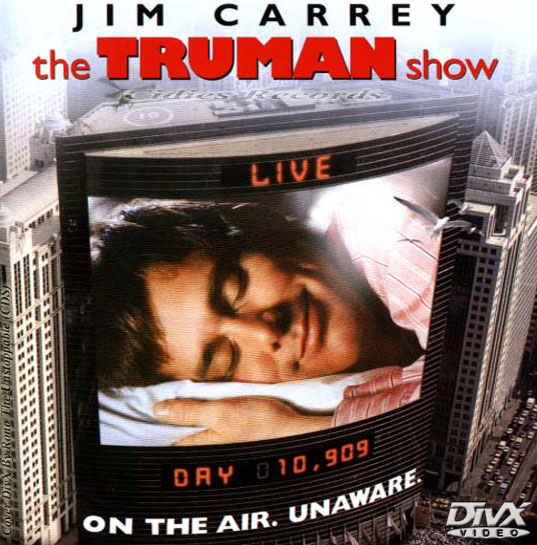
THE TRUMAN SHOW: How’s It Going To End?


Answer the Guide Questions. Reason Out by Defending Your Answers.

1. Being chosen to be the star of his own “TV show”, do you consider Truman lucky?

2. Is the world created for Truman perfect?

3. Before Truman knew everything, was he living a real/natural/authentic life?

4. After knowing his situation, was Truman living a real/natural/authentic life in the world created for him?

5. Do you think he has freedom before he knew the set up?

6. Is freewill absolute?

7. Do you think Christof (“the creator”) has the right to do what he did to Truman towards the end of the movie?

8. Which world is better for Truman: his world inside the studio or the “real/outside world”?

9. If you are Truman and you have found out the truth from “the creator” (who made you realize a lot of things like being blessed with almost everything), what will you do: will you still leave your “world”?

10. Would you like to live Truman’s life?


IMPORTANT: Ask for your guardian's signature. Write your COMPLETE ANSWERS ONLY on a letter size (short) bond paper. Make sure that what you will submit is printed (computerized). Deadline is on Thursday, Feb. 19, 2009 during your respective English period.


http://coverdivx.altervista.org/The_Truman_Show-front_DivX.jpg

Monday, December 15, 2008

Juniors' 3rd Quarter Exams for RESEARCH

Take note of the definition of the following words:

Introduction, Statement of the Problem, Research Objectives, Null Hypothesis, Assumption

Remember the two (2) Types of Objectives [General and Specific], the two (2) Types of Hypothesis [Null and Hypothesis], and the five (5) Characteristics [S.M.A.R.T.= Specific, Measurable, Attainable, Reasonable, Time-bound]

You need to write your own STATEMENT OF THE PROBLEM (with SPECIFIC QUESTIONS), HYPOTHESIS, and ASSUMPTION based on two (2) research titles provided.

Therefore, be ready to construct/write/compose your own paragraph (STATEMENT of the PROBLEM) with SPECIFIC QUESTIONS, and sentences for your HYPOTHESIS, and ASSUMPTION for each Research Title.

IMPORTANT: Notebooks in Research will be Collected after your Research Exam.

Tuesday, December 9, 2008

SENIORS' Final English Lesson/Homework for the 3rd Quarter

Read "Two Kinds" (photocopy of the short story). On your notebook, write the meaning of the following words: Prodigy, Lop Off, Reproach, Listlessly, Sauciness, Cascaded, Squabbling, Snotty, Dawdled)

On 1-whole sheet, write ONLY the answers to the following questions:

A. COMPREHENSION RESPONSE

1. What did Amy’s mother want so much for her daughter? Infer her definition of prodigy.

2. What kind of mother was she? Cite an instance that illustrates every description.

3. Initially, how did Amy feel about awakening the prodigy in her? How did these feelings change?

4. How did Amy regard herself? How did this affect her feelings about her mother’s quest?

5. Pick out lines that show Amy’s disinterest in piano lessons.

6. Amy’s mother remained silent after Amy’s disastrous performance. What did her silence mean? What was the effect on Amy?

7. What could be an ideal scenario, one in which the desires or objectives of the mother and Amy are accommodated, thereby avoiding any clash or hostility between the two?

8. Reread the dialog between 30-year-old Amy and her mother about the piano. How does the mother’s attitude strike you compared to how she struck you earlier on?

9. Would you say the mother succeeded in bringing out the prodigy in Amy?

10. “And after I had played them (‘Pleading Child’ and ‘Perfectly Contended’) both a few times, I realized they were two halves of the same song.” Explain what this means.


B. VALUES

1. What is expected of children in Chinese families? Are these expectations similar to Filipino parents’ expectations of their children? What makes you say so?

2. What kind of daughter was Amy? In what way can you relate to her or her experiences?

3. What kind of son or daughter are you? What exactly is your role or place in your family? Recall an incident in your life that illustrates this.

PARENT'S/GUARDIAN'S Signature MUST be placed beside the last word of the last item on the last line of the paper.

Tuesday, November 25, 2008

Play Production Schedule for Seniors

Here's the checklist I have made...


Micheau had their Make-up, Dress, and Technical Rehearsal last Tuesday, November 25 at the Gym. They just need to polish the transitions of scenes. However, they need to work better on the blocking, execution of lines and acting, as well as the sound/music.

ADT’s schedule for the Make-up, Dress, and Technical Rehearsal at the Gym is on Wednesday, November 26 at 12:10 PM. Wednesday has shortened period classes. ADT students will have their two-period TLE beginning 7:00 AM.

Barbe’s schedule is as follows: on Wednesday, November 26 at 7:00-8:50 AM, Barbe will have their classroom practices. Ms. Encarnacion generously gives the 1st half of her two-period TLE from 10:00-10:50 after Recess. Barbe’s Make-up, Dress, and Technical Rehearsal at the Gym starts at 3:10 PM on Friday, November 28. Ms. De Luna’s 4:10-5:10 period on Friday will be spent for the said practice.

Thursday’s English period is the time for each section’s promotion in school. Be ready for the promotion (Approved Tarpaulin/Poster/Leaflets). Only a scene or two will be performed in each class that will be visited.

The Saturday practice is yet to be approved. Upon approval, the schedule of the final rehearsal will start at 1:00 PM inside each section’s room. All the props/set/backdrop MUST be kept within the classroom by Saturday, November 29. ATTENDANCE will be CHECKED.

WE NEED TO SOLVE THIS: Making sure that the backdrop is all black. FINDING a cheap rental for Sounds (and Lights?) – the budget will be equally divided into three.

REMEMBER: Regardless if your class wins first place or not, your grade DOES NOT DEPEND ON THE AWARDS/SCORE. WHAT’S IMPORTANT is that you do everything in accordance to the correct process of the production. NO APPROVAL MEANS NO GRADE.

Sunday, November 16, 2008

Seniors' Schedule of English Classes This Week

Monday - Submission of Final Draft and List of Roles/Staff for the Play Production Script; Quiz about the Short Story, "The Lottery Ticket", Purpose of Fiction, and Plot Lines;

Checking of Homework about "The Necklace",

(Rehearsal for ADT-2nd Period for English) and (for Barbe's Research: Submission of Final Questionnaire Matrix and Letter for your Survey)

Tuesday - 2 period-Rehearsal for Micheau's Play Production

Wednesday - Rehearsal for Barbe's Play Production

Thursday - Regular Class for All Sections (Topic: "The Necklace")

Friday - Rehearsal for ADT's and Barbe's Play Production

VERY IMPORTANT: Please find Time to Rehearse (Breaks, Vacant Period/s, etc) since Wednesday and Friday classes will be interrupted

Thursday, October 16, 2008

ENGLISH IV 2nd Quarter Exam

1. VOCABULARY WORDS: Anon, Carafe, Contrived, Droop, Feigned, Loftiest, Mortician, Pomp, Ruddy, Sinuous, Swooned, Treacherous, Votive

2. Read and UNDERSTAND the selections and introductions we have discussed about Roman and European Literature
· INTRODUCTION: 4 Major Writers of Rome
· The Strategem of the Wooden Horse and The Fall of Troy
· The Enchiridion
· INTRODUCTION: Reading the Epic
· Nibelungenlied: The Death of Siegfried
· The Song of Roland: The Death of Roland

3. MISPLACED MODIFIER (The use of Only, Just, etc.)

4. DIRECT to INDIRECT SPEECH (Changes in Tense and Person occur)

5. VERBALS: Participle, Infinitive, Gerund

6. PRESENT PERFECT only! (HAVE + Past Participle)

7. Why does Rome hold the secondary position in the classic literature of antiquity?

8. THE LITTLE PRINCE: The Wisdom from the Fox

Monday, October 6, 2008

Reminders to All 3rd Year Students (O.L.A., O.L.C., O.L.L.) for this Week

  • Be ready for a LONG TEST. Study everything we have discussed for the second quarter. Study hard. If you always do, then, study harder.

  • Your notebook will be checked and will be considered as a Minor Project for Research for this quarter. Bring it during our Research Period.

  • Apply the correct format for Chapter 1 (Cover page, Introduction, Statement of the Problem, Objectives: General and Specific, and Hypotheses: Null and Alternative).

  • The printed copy of Chapter 1 will be submitted on Friday. Here is the schedule of the submission per section: Recess Time for O.L.A., Lunch Break for O.L.C., and Research Period for O.L.L.

  • Please refer to the copy/copies of Chapter 1 I have offered/lent you. As a group, you may go to the library to have a better understanding on how to write Chapter 1 during your free time.

  • Those groups who intend to submit a complete Chapter 1 (which includes the Assumption, Significance of the Study, Scope and Limitation, and Definition of Terms) on Friday will have bonus points.

  • If you find it a little difficult writing Chapter 1, please set a schedule with your Research Subject Teacher for consultation. He will be willing to help and guide you in writing the first four parts of the chapter.

  • A special task will be given to all group leaders before the 2nd quarter examination days.

Sunday, October 5, 2008

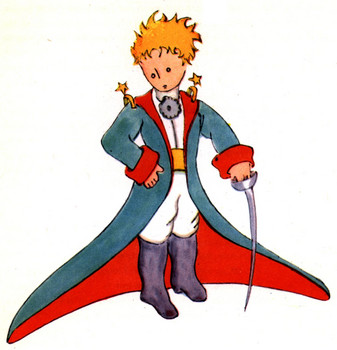
BOOK ANALYSIS: The Little Prince

I know you’ve waited for the Guide Questions. So, here are some more tips for the format…

Your Original Title for the Analysis (Write Subtitles for Each Part as well)

Introductory Paragraph (1 Paragraph with Only 3 Sentences)

Don't get too detailed here. It's just the introduction. Provide basic information about the book, and a sense of what your analysis will be about. You should include:
· Title (underlined)/Author of the Book
· Publication Information: Publisher, year, number of pages
· Genre
· A brief introduction to the book and your analysis.


Body Paragraphs (3 to 4 Paragraphs Only)

This is where the real content enters the picture. By reading this part of your book analysis, your teacher will be able to determine whether you read the book and understood the story.

Start by explaining the author's purpose and/or the main themes of the book. Then you can summarize by describing the main characters of the story. Also, describe the conflict. Common conflicts include man vs. man, man vs. nature, and man vs. himself. The Little Prince may present a different kind of conflict. Describe it in detail.

Provide brief descriptions of the setting, the point of view (who tells the story), the protagonist, and other major characters. If there is a distinct mood or tone, discuss that as well.

The remaining body paragraphs should summarize the plot. Describe how it relates to the conflict. Begin with the rising action – the part of the story where events build. Then, describe the climax, where the story reaches its most dramatic or interesting point. The third paragraph should describe the falling action, when the conflict or problem is resolved.

Remember: Give only a concise plot summary! Along with the sequence of major events, you may want to discuss the book's climax and resolution, and/or literary devices such as foreshadowing. Be careful not to give away important plot details or the ending.

Your Conclusion (2 to 3 Paragraphs Only)

Briefly conclude by pulling your thoughts together. Say what impression the book left you with, or emphasize what you want the readers (of your analysis) to know about it.

This is an appropriate place to state your personal opinion of the book. Remember, a winning paper will use examples from the book to back up your comments. So, when you write about your own opinions, just be sure that you explain and support them with examples. Here are some questions you might want to consider:
· Did the author achieve his/her purpose?
· Is the writing effective, powerful, difficult, beautiful?
· What are the strengths and weaknesses of the book?
· What is your overall response to the book? Did you find it interesting, moving, dull?
· Would you recommend it to others? Why or why not?

References:
- Photo Courtesy of http://www.lookingglassreview.com/assets/images/The_Little_Prince.jpg
- Format from http://www.infoplease.com/homework/wsbookreporths.html
and http://www.homeworkspot.com/features/bookreports.htm

Thursday, October 2, 2008

The Long Wait is Over

This is it! After quite some time, I'm now done doing this blog. I know I need to learn more about this kind of stuff. But hey, I'm a newbie.

To all the visitors (you know who you are), you can leave comments here. However, I could only post the ones I would like to show/see. So, be nice. As I always say, I am nice when you're nice - and I wish to be nicer - so, stay nice. Alright?

I will be leaving announcements here such as homeworks, activities, projects, and the like. I will also make sure to update the posts of this blog. Hopefully, that would be everyday.

As early as now, I'm apologizing if I may not be able to respond right away. Nonetheless, the posts here will be a lot helpful most specifically regarding your concerns.

The ultimate purpose of this blog is for us to communicate. I do hope I have sent the message. Until next time... CARPE DIEM!


blogger templates 3 columns | Make Money Online